
Writing advice
The five-point story arc: a simple structure for your novel
So you want to find out how to structure a novel, but then you look up story structure online, and… Holy smokes! There’s a whole smorgasbord of story-planning systems out there, all jostling for your attention. Each of these guides to story structure comes with its own rules and jargon. Some even come with their own downloadable software and apps!
As a new writer, where do you even begin?
Well, we’re here to tell you that planning a story doesn’t have to be all that complicated. In fact, we know from experience that you only need five points to create a truly compelling plot. And here’s the best bit: you don’t even need to learn anything new! The five-point story arc is a very simple structure – inciting incident, journey, midpoint, crisis, resolution – that underpins most satisfying stories. You may not yet realise it, but you are already deeply familiar with this structure through a lifetime of reading, watching and listening to stories.
Intrigued? Let’s dive in to learn more about how to create the best structure for your novel and why it will provide you with a framework for success.
As a new writer, where do you even begin?
Well, we’re here to tell you that planning a story doesn’t have to be all that complicated. In fact, we know from experience that you only need five points to create a truly compelling plot. And here’s the best bit: you don’t even need to learn anything new! The five-point story arc is a very simple structure – inciting incident, journey, midpoint, crisis, resolution – that underpins most satisfying stories. You may not yet realise it, but you are already deeply familiar with this structure through a lifetime of reading, watching and listening to stories.
Intrigued? Let’s dive in to learn more about how to create the best structure for your novel and why it will provide you with a framework for success.
What is the five-point story arc?
At PageOne, we firmly believe that planning is your writing superpower. The five-point structure is the tool through which you, the writer, will channel that power.
Let’s take a look at those five points again:
Let’s take a look at those five points again:
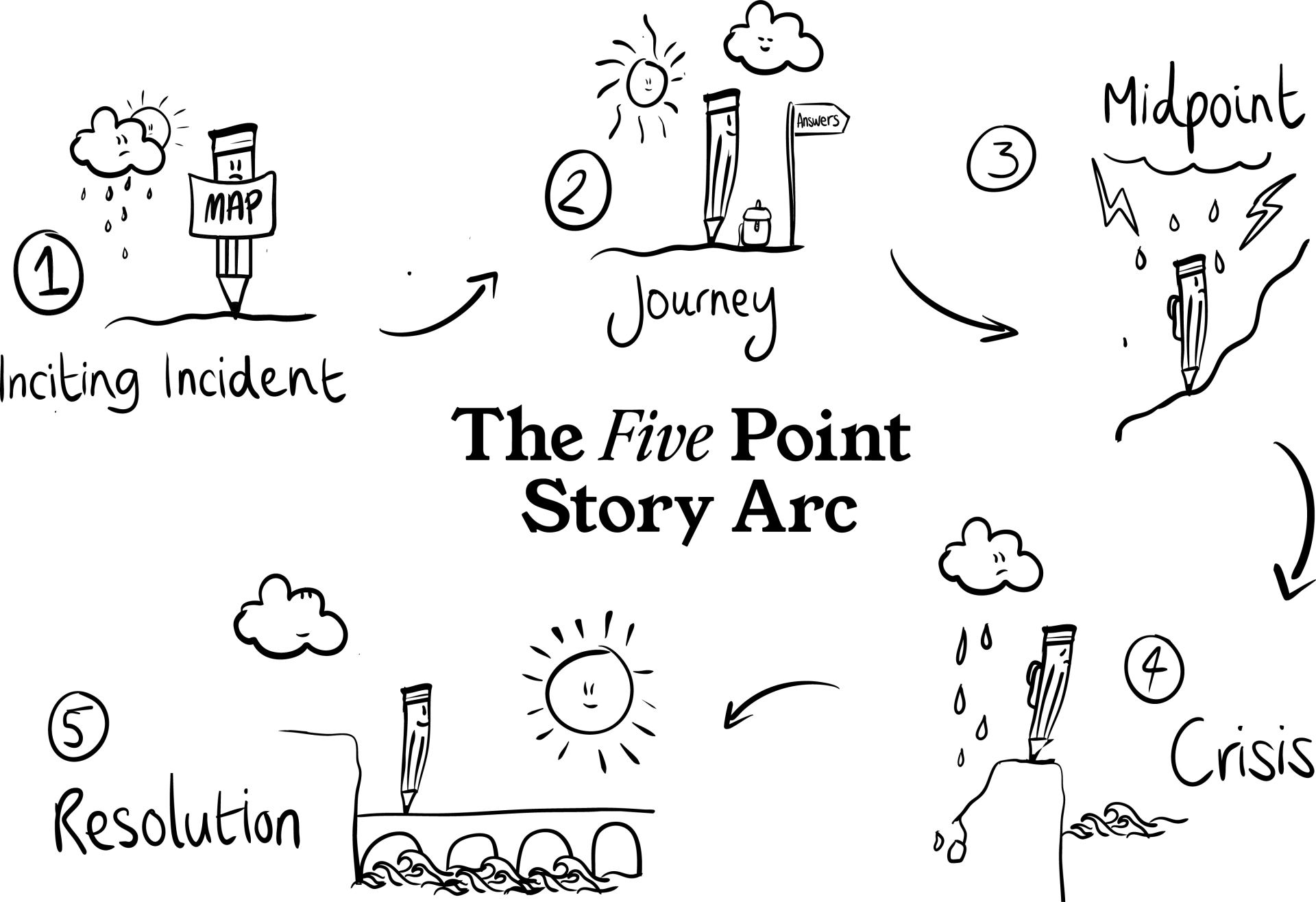
If you’ve not heard of these terms before now, don’t panic! Without even knowing it, you will have encountered the five-point story arc in pretty much every story you’ve ever experienced. It was in the fairy tales and cartoons of your childhood. It was also in the blockbuster movies and bestselling novels that have gripped you as an adult! It is as ingrained in your sense of what a story is as ‘once upon a time’ and ‘they all lived happily ever after’.
Remember, all we are doing is naming what you already instinctively know.
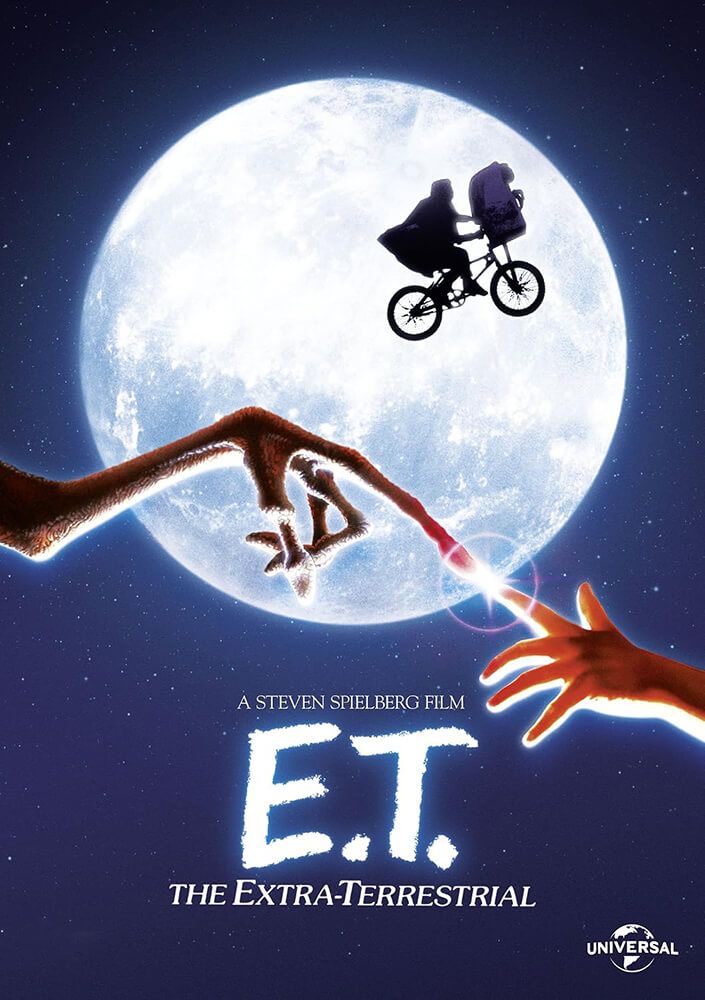
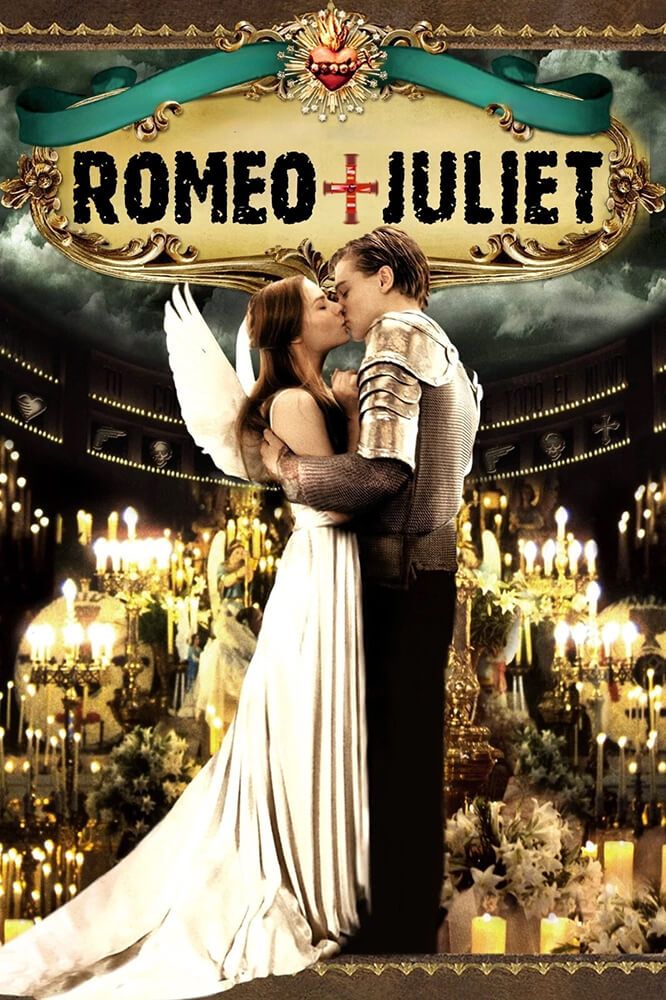
Let’s take a deeper dive into each of the five points now, and see how they fit into stories we already know well. We’re going to use the 1980s smash-hit movie, E.T., and Shakespeare’s Romeo and Juliet, but feel free to think about what those points are in your favourite book or movie, too.
Remember, all we are doing is naming what you already instinctively know.
Let’s take a deeper dive into each of the five points now, and see how they fit into stories we already know well. We’re going to use the 1980s smash-hit movie, E.T., and Shakespeare’s Romeo and Juliet, but feel free to think about what those points are in your favourite book or movie, too.
The Inciting Incident
This is the moment that your story really kicks off. Up until this point, life is ticking along as normal for the main character – but then the inciting incident changes everything. It propels your character on a new and unexpected course. Closely related to the hook of your story, the inciting incident should leave your reader intrigued to discover what happens next.
In E.T., the inciting incident occurs when a ten-year-old boy, Elliott, discovers an alien hiding in his shed.
In Romeo and Juliet, Romeo falls in love at first sight with Juliet, not realising that she is a Capulet, the daughter of an enemy household.
The Journey
Following the inciting incident, a chain of events is set in motion, sweeping the character – and the reader – along the path of the story towards the midpoint.
In E.T., Elliott and E.T. start to play together and become friends. Elliott realises that E.T. has incredible powers, and the two form a bond that means they begin to share emotions.
In Romeo and Juliet, the two young lovers wrestle with the implications of their forbidden love. They form a plan to unite their warring households through their marriage.
The Midpoint
This is the main turning point in your story – frequently a twist or a revelation. It forms another key moment of change for your main character – often, when they receive fresh information that turns everything they thought they knew on its head. It can change everything the reader thought they knew, too!
In E.T., the midpoint comes when Elliott and E.T. finally manage to ‘phone home’ – they make a signalling device to communicate with E.T.’s alien family.
In Romeo and Juliet, the midpoint sees Juliet’s cousin, Tybalt, kill Romeo’s best friend. Romeo slays Tybalt in return, and as a result is exiled from the land.
The Crisis
The crisis is a culmination of events that have built up to result in the worst possible moment for the main character. All hope has been lost (or appears to have been lost). The reader despairs and cannot see how the story will be resolved.
In E.T., the psychic link that has grown between E.T. and Elliott means that a mysterious sickness befalls both alien and boy. The sickness leads to E.T.’s death.
In Romeo and Juliet, Romeo believes Juliet to be dead, having missed a vital letter explaining that she has taken a potion to mimic death. In his grief, he takes his own life – at which point, Juliet awakens and finds her lover dead. She takes her own life, too.
The Resolution
The resolution is the last of the five points – the moment when the main question or problem in the story is finally resolved. The reader finds satisfaction in the ending – even if it is not a happy one!
In E.T., Elliott’s love for E.T. restores the alien to health, and he manages to return E.T. to his spaceship.
In Romeo and Juliet, the two feuding households are finally reconciled in their shared grief. The war is over, but at the cost of Romeo and Juliet’s lives.

Editor’s Tip
Why structure will actually set you free
What about acts? How do they work with the five points?
How to use the five-point story structure to plan your novel
The big tip here is to start with just three of the five points: inciting incident, midpoint, resolution. In other words, your beginning, middle and end! Easy, right? Once you have those three key points pinned down, join the dots with your remaining two points. How does your character travel from the inciting incident to the midpoint? That’s your journey. Following the midpoint, what will be the worst possible moment for your character, before everything is resolved? There’s your crisis.
As soon as you have those five points firmly in place, you can dive deeper into planning, filling in the details and fleshing out the plot. We will show you how to do this step by step in our Start Writing Commercial Fiction course, guiding you through planning your chapters and writing a synopsis for your story. Meanwhile, the five-point story arc will underpin everything, ensuring the shape of your novel will hold up.
As soon as you have those five points firmly in place, you can dive deeper into planning, filling in the details and fleshing out the plot. We will show you how to do this step by step in our Start Writing Commercial Fiction course, guiding you through planning your chapters and writing a synopsis for your story. Meanwhile, the five-point story arc will underpin everything, ensuring the shape of your novel will hold up.
Blank page, be gone!
And there you have it – with just five key points, you’ve sketched out a plan for an entire novel. You know where you’re starting, where you want to end up, and you’ve pinpointed all the main stopping-off points you need to hit on the way. You’ve transformed a blank page into a roadmap, and you’re ready for the next step in your journey as a writer.
Of course, you may be still be wondering whether you absolutely have to plan. We get it – you’re itching to start writing! Look, there are no rules and regulations about this – nobody’s going to slap you in writer jail if you ‘pants’ it (fly by the seat of your pants and dive straight into the writing without a plan). But here’s the thing: not planning ahead is one of the most common reasons for writers coming unstuck. They might have absolutely no idea what their midpoint is, and lose steam as a result. Or they might think they know their ending, but pantsing their writing takes them in entirely the wrong direction. Bam! They find themselves deleting tens of thousands of words, and heading straight back to the drawing board.
So, no, you don’t have to plan. But we know from experience that our authors create their strongest, most compelling stories when they plan ahead. It’s efficient, it’s effective and it saves an awful lot of writerly heartache later down the line! So… Why not give it a try?
Frequently asked questions
What if my story doesn’t fit the five-point story arc?
Well, we’d say that either it does fit the five-point arc, and you just haven’t yet worked out exactly how it fits, or that your story is missing some vital component!
Look at your story idea again. Which of the five points can you identify within it? Which ones appear to be missing? Can you think of anything that already exists in your story that might fit the missing points? Maybe your crisis is already there, but it needs a tweak to make it strong enough to stand out. Or maybe you forgot to add in a crisis at all! Perhaps you have multiple sub-plots for multiple characters, and that’s getting you in a tangle? If that’s the case, just pick the main plot to focus on for the sake of the five-point plan. In our (quite extensive!) experience, if a story’s going to work, it will definitely fit the five-point structure.
Is the five-act or five-point story structure better?
As we mentioned earlier, the five points sit within the acts of the book. It’s not that one system is better or worse than the other – they actually interrelate! But we strongly suggest that writers begin with the five-point story arc. This is the simplest, most fundamental plan that will still hit all the main beats of a compelling story. Thinking about the acts that those points sit within is a layer you can add in later. The first and foremost task is to make sure your five-point plan is solid. Start with this, and everything else will fall into place around it.
Is the five-point story arc the same as the hero’s journey?
No, but here’s the thing – they both boil down the shape of a satisfying story to its key parts. Remember, there are oodles of story structures out there – the hero’s journey, Save the Cat, the seven-point plan, to name but a few! They all have distinct differences, but they are also all based on centuries of tried-and-tested storytelling. It might help to see them as variations, rather than rival systems. Remember, we believe the five-point plan gives the best, most actionable foundation for writers starting out on their story.
Can I use the five-point story arc for any genre?
Absolutely, yes you can! And you should! Whether you’re writing psychological thriller or romantasy, cosy crime or historical fiction – whether you’re a Spielberg or a Shakespeare – the five-point story arc provides the perfect shape for a well-crafted, gripping story.
Your next
chapter awaits

Featured pages

Copyright Storyfire Ltd. © 2026